
A lot of tabletop gamers make the same mistake when they start worldbuilding.
They think “fantasy” means they have to invent everything from nowhere.
New continents. New religions. New trade routes. New calendars. New metal alloys. New fish. Especially new fish, for some reason.
And sure, you can do that. If building twelve dynasties and a beet-based currency system brings you joy, live your truth. But most memorable fantasy worlds do not feel rich because the creator invented the most stuff. They feel rich because the invented parts are anchored to something real.
That is the trick.
Create from what you know.
Not because imagination is limited. Quite the opposite. Imagination gets stronger when it has something solid to push against. The best fantasy often comes from taking real feelings, real places, real fears, real friendships, real losses, and real bits of lived experience, then letting them grow into a strange new entity.
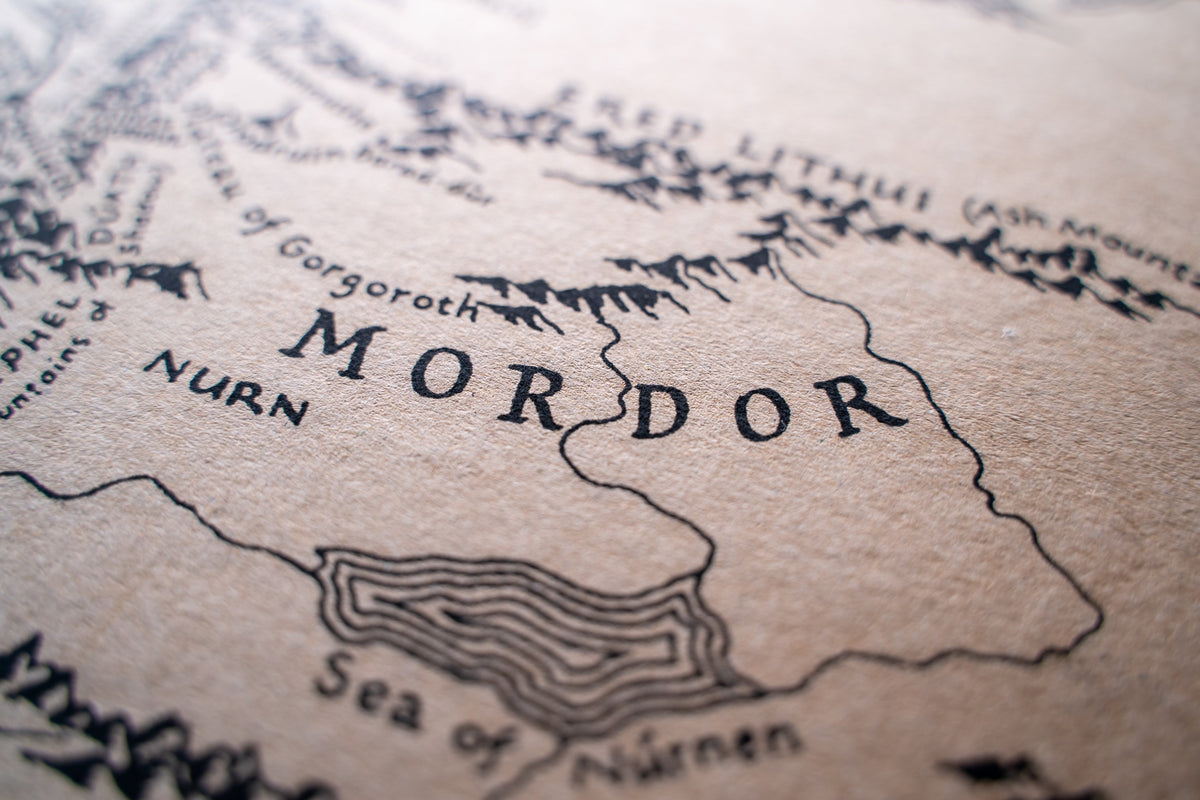
J.R.R. Tolkien is one of the clearest examples of this. He was a scholar and writer, yes, but he was also a man shaped by friendship, language, landscape, and war. He served in World War I with the Lancashire Fusiliers, was present during the Battle of the Somme in 1916, and later came down with trench fever. Scholars and Tolkien resources also note that some of his earliest legendarium material took shape during the war, and Tolkien himself later said the Dead Marshes owed something to northern France after the Battle of the Somme.
That does not mean Middle-earth is some one-to-one allegory for World War I. Tolkien famously resisted that sort of flattening. But it does mean his fantasy didn't come out of a vacuum. The emotional and sensory reality of his life fed the world he built. The mud, the loss, the fellowship, the long roads, the old languages, the rural places he loved, all of that mattered.
And that is incredibly good news for the rest of us, because most of us are not trying to become Tolkien. We are just trying to build a setting for a campaign that feels alive when the party kicks in a door.
You Already Have More Material Than You Think
When people hear “create from what you know,” they sometimes worry it means fantasy has to become ordinary. As in, your grand kingdom of dragon riders is about to turn into an exact copy of your hometown strip mall with goblins.
That is not what this means.
It means you start with truths you understand.
Maybe you know what a small town feels like when everybody knows everyone else’s business.
Maybe you know what it’s like to move somewhere new and feel the rules before you understand them.
Maybe you know the weird pride of local traditions, the bitterness of old family grudges, the rhythm of seasonal work, the smell of a river town, the anxious energy of a place living under threat, the way a close friend can feel like home in a bad situation.
That stuff is gold.
You can build a fantasy city around the emotional truth of your college town. You can build a noble feud around the energy of two branches of one messy family. You can build a dwarf mining settlement out of your memories of working retail during a holiday rush if that’s where you learned what exhaustion, routine, and dark humor really feel like.
The point is not accuracy. The point is texture.
Players respond to texture. They may not consciously think, “Ah, yes, this market district has the social complexity of a real place.” They will just feel that it does.
Tolkien Didn’t Invent Depth by Inventing Randomness
One reason Tolkien still matters so much to fantasy is that Middle-earth feels old, layered, and lived in. Languages have roots. Songs refer to things outside the immediate plot. Landscapes feel loved, feared, or remembered. Cultures feel like they grew over time instead of being dropped from orbit five minutes before the players arrived. Tolkien’s work as a scholar of language and literature is all over the texture of Middle-earth.
But the lesson isn’t “go become a philologist and an Oxford Don or perish.”
The lesson is that depth comes from relationship.
Tolkien knew languages deeply, so language shaped his world. He knew the weight of war and loss, so those shadows shaped his world, too. He knew friendship, countryside, myth, and faith, and they all left fingerprints. The result feels immense, not just because it is detailed, but because the detail grows from things that mattered to him. His work on The Hobbit and The Lord of the Rings later introduced Middle-earth to enormous audiences, but the roots of that world were personal before they were famous.
That is a useful correction for GMs, because a lot of us spend energy inventing facts instead of relationships.
We build kingdoms before we know what an ordinary breakfast looks like there.
We write pantheons before we know what people are scared of.
We draft ten thousand years of history before we know why this one ruined watchtower matters to the paladin.
You don’t need that much raw material. You just need the right material.
Start With a Feeling, Then Build Outward
A great way to create from what you know is to start with a feeling you understand very well.
Homesickness.
Class resentment.
Religious devotion.
Forbidden love.
Grief that sneaks up on you sideways.
The buzz of a festival.
The dread of waiting for bad news.
The warmth of a place that feeds you even when you have no money.
Now ask: what would that feeling look like in fantasy form?
Let’s say you know the feeling of growing up in a town where everyone is proud, stubborn, and a little suspicious of outsiders. Great. That can become a hill country of fiercely independent halfling clans who settle disputes with elaborate hospitality rituals and remember insults for three generations.
Let’s say you know what burnout feels like. Fantastic. That can become a mage academy where every spellcaster is running on fumes, living on bitter tea, and pretending the tower is not one badly timed experiment away from becoming a crater.
Let’s say you know what it is like to watch a place change so fast it barely feels like itself anymore. That becomes worldbuilding instantly. Maybe your port city is being transformed by planar trade. Maybe an old forest shrine town is now a military road. Maybe the gods are back, and nobody can agree whether that is a miracle or a zoning disaster.
Feelings scale beautifully into fantasy.
The War Lesson Isn’t “Make It Grim”
When people bring up Tolkien and World War I, they sometimes jump straight to one shallow takeaway: suffering makes art serious.
That is not a useful lesson.
The useful lesson is that lived experience, even painful lived experience, can give fantasy weight. Tolkien lost close friends during the war, served through brutal conditions, and later carried those experiences into a body of work deeply concerned with loss, endurance, courage, fellowship, and the cost of evil.
Notice that this did not make Middle-earth one-note.
It’s not all misery. It has feasts, jokes, songs, pipe smoking, gardens, bad decisions, odd little meals, and people being stubborn in deeply recognizable ways. That balance is part of why it works. Hardship means more when there is something worth protecting. Friendship means more when the world has teeth.
That is excellent guidance for tabletop worldbuilding.
If your setting is all pain, players get numb.
If your setting is all whimsy, the stakes go mushy.
Creating from what you know means you can use the full range of life. The scary parts. The funny parts. The cozy parts. The embarrassing parts. The parts where people keep going because there is ale, music, or one friend who still believes in them.
That is worldbuilding, too.
Steal From Your Real Life, Then Put on a Funny Hat
This is maybe my favorite practical rule.
Take a real thing. Then tilt it.
A bus route becomes a caravan road through haunted salt flats.
Your awful apartment building becomes a vertical fantasy neighborhood built into the ribs of an ancient titan.
The local family diner becomes a tavern where folks whisper rumors of ill deeds afoot over piping hot bowls of stew and tankards of ale.
Your memory of school bureaucracy becomes a church hierarchy full of sacred paperwork and passive-aggressive archdeacons.
The trick is that the emotional logic stays real even when the aesthetics go bananas.
That is why players buy in.
They know what it feels like when the guards at the city gate are tired, underpaid, and one inconvenience away from becoming everybody’s problem. They know what it feels like when one district is quietly nicer than another, and nobody wants to say why. They know what it feels like when a small community rallies around one weird local tradition because it is part of who they are.
You don’t need to tell them, “This is based on my experience working a terrible summer job in a tourist town.” You just use what that experience taught you.
Build Specific, Not Generic
“Create from what you know” also helps you dodge generic fantasy mush.
Generic fantasy is usually not bad because it uses familiar ingredients. It’s bad because it uses them vaguely. The village is “quaint.” The kingdom is “troubled.” The forest is “mysterious.” The empire is “corrupt.” Fine, but so what?
Specificity is what gives a setting bite.
Not just “a port town,” but “a port town where every family has some private signal system for storm warnings and smuggling.”
Not just “a knightly order,” but “a knightly order that grew out of flood rescue crews and still treats boats as holy objects.”
Not just “an ancient enemy,” but “an ancient enemy whose occupation is still remembered in recipes, swear words, and missing surnames.”
That’s the good stuff. And it usually comes more easily when you are drawing from some real understanding of how communities, jobs, rituals, grudges, or landscapes actually work.
Your Table Doesn’t Need a Masterpiece
This is worth saying because Tolkien can be a deeply unhelpful comparison if you let him loom too large.
You don’t need to build Middle-earth.
You need to build enough world that your players care whether the bridge burns, the duke lies, the harvest fails, or the moon temple opens.
That is a much friendlier assignment.
One village with believable local tension is better than a continent full of encyclopedia fog.
One religion with rituals people actually use is better than twelve gods with no effect on daily life.
One road with weather, danger, memory, and rumor is better than a map stuffed with place names nobody feels.
Tolkien built a landmark fantasy world, yes. He also reminds us that great fantasy grows from close observation, deep feeling, and things the creator genuinely cares about. His time in World War I did not simply “become” Middle-earth, but it clearly belonged to the reservoir of experience he drew on, just as his scholarship and love of language did.
That is the real invitation.
Use your reservoir.
Use what you know about weather, work, fear, loyalty, boredom, hospitality, hunger, pride, class, grief, jokes, rituals, music, family, streets, and silence. Then let fantasy transform it. Make it bigger, stranger, older, brighter, sadder, more magical, more dangerous.
But keep the human truth in it.
Because that’s what players recognize, even when they are standing in an elven ruin arguing about who packed the rope.
And that is usually when the world starts to feel real.
Your Turn!
What have you taken from real life to help create your world? Let us know in the comments!
Build Bigger Stories With Gooey Cube TTRPG Adventures
Great tabletop roleplaying games give players a world worth getting lost in. Gooey Cube creates immersive TTRPG adventures, campaign settings, and Game Master resources designed to make those worlds easier to run and more memorable to explore.
Whether your group is starting a new fantasy TTRPG campaign or looking for fresh locations, characters, encounters, and story ideas, Gooey Cube gives GMs more to work with at the table. Our adventures combine detailed storytelling with practical game materials, helping you spend less time building every piece from scratch and more time reacting to whatever your players decide to do next.







0 comments