
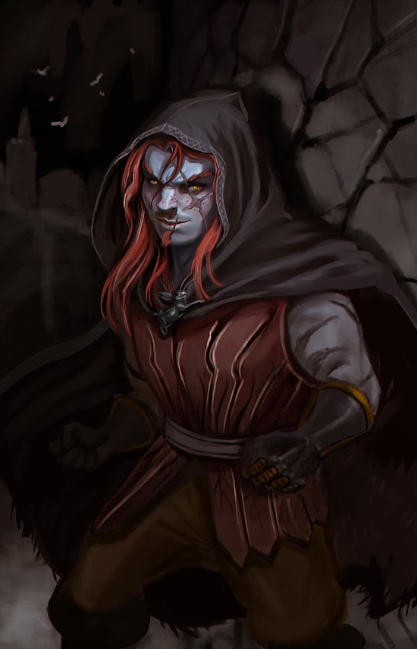
Multiclassing is one of those tabletop ideas that becomes dangerous the moment a player opens a rulebook and says, “Okay, hear me out.”
Sometimes what follows is brilliant. A heavily armored warrior discovers forbidden magic and gradually becomes something much stranger than the soldier who began the campaign. A charming rogue makes a bargain with an otherworldly patron because talking their way out of trouble has finally stopped working. A devoted priest takes up martial training after realizing that prayer alone isn't going to protect the people they care about.
Other times, somebody has discovered a combination of abilities on the internet that can theoretically produce 147 points of damage provided it's the third Tuesday of the month, the enemy is standing within five feet of a shrub, and everyone agrees on a particularly enthusiastic interpretation of page 214.
Both approaches are technically multiclassing.
Only one of them is likely to make your character feel like an actual person.
Multiclassing can be a fantastic way to customize a character, reinforce a developing story, or gain abilities that support the way you already enjoy playing. It can also leave you with a character who's frustratingly behind everyone else because you've collected a handful of low-level abilities that don't work particularly well together.
So before you add another class to your character sheet, it's worth figuring out exactly what you're trying to accomplish.
Start With a Reason
The best multiclass characters usually begin with a simple question: why?
Why is your character learning this?
The answer doesn't have to involve a twenty-page backstory or a three-session training montage. It simply needs to make sense for the character and the campaign.
Maybe your fighter has spent months traveling with the party's wizard and has finally started learning basic magic. Perhaps your rogue has become genuinely devoted to a deity after surviving something they can't explain. Your barbarian might begin studying wilderness skills after months of guiding refugees through dangerous territory.
Those developments feel natural because the campaign itself created them.
That doesn't mean you need a dramatic narrative justification every time you multiclass. Sometimes the concept was there from the beginning. Maybe you've always pictured your character as a sword-wielding spellcaster, holy warrior, magical thief, or wandering monster hunter, and no single class quite captures the whole idea.
That's perfectly reasonable.
What matters is knowing what the second class contributes to the character beyond another collection of buttons to press.
Know What You're Giving Up
Multiclassing isn't free.
Whenever you take advancement in another class, you're usually delaying something in your original one. Depending on the game, that might mean stronger attacks, higher-level spells, additional features, attribute improvements, or access to powerful abilities that arrive at later levels.
This is where players sometimes get themselves into trouble.
They look at what they're gaining without considering what they're postponing.
Suppose your character is one level away from gaining an ability that dramatically improves how they function in combat. Taking another class right now might give you several fun new tricks, but it could delay the feature that makes your primary class really come alive.
Before multiclassing, look ahead.
You don't need to plan every level your character will ever take, especially in a campaign where surviving until next Thursday is already questionable. You should, however, understand what your current class would've received if you'd stayed with it.
Multiclassing is a trade.
Make sure you know what you're trading.
Don't Multiclass Just Because You Can
Sometimes the strongest multiclass decision is staying exactly where you are.
There's a tendency among experienced players to treat multiclassing as the sophisticated option, as though remaining in one class means you simply haven't discovered the advanced menu yet.
That's nonsense.
Single-class characters are often powerful, flexible, and wonderfully coherent. Many games reward specialization specifically because higher-level class features are supposed to compensate for having fewer options.
If your character already does what you want them to do, you don't need another class.
Ask yourself whether multiclassing solves an actual problem or supports an actual concept.
If the answer is, “I was looking through the book and this seemed neat,” maybe wait a level.
There will always be neat things in the book.
That's how they get you.
Look for Abilities That Work Together
Effective multiclassing is less about collecting strong abilities and more about finding abilities that cooperate.
Imagine one class gives you an excellent bonus when attacking from close range, while another provides tools that help you reach enemies and stay beside them. Those abilities support each other.
That's synergy.
By contrast, if one class wants you fighting in heavy armor with a giant weapon while another depends on mobility, light equipment, and abilities you can't use while carrying that giant weapon, you've created a character who's constantly arguing with their own character sheet.
Before choosing a combination, look at what each class expects you to do during a typical turn.
Do both classes want the same attributes?
Can their signature abilities be used together?
Do they compete for the same limited action?
Does one require equipment that interferes with the other?
Are you gaining useful options or simply more ways to do the same thing?
A good multiclass character often has a clear rhythm. The abilities feel like parts of one toolkit instead of leftovers from two different toolboxes.
Be Careful With Attribute Demands
This is one of the less glamorous parts of multiclassing, but it matters.
Different classes often depend on different attributes, and spreading yourself too thin can make everything slightly worse.
Your warrior might need strength and durability. Your spellcasting class might rely on intelligence, wisdom, or charisma. Suddenly you're trying to improve three or four important attributes while the single-class characters around you can concentrate on one or two.
That's not automatically a problem, especially if your concept doesn't depend on maximizing everything.
But know what you're getting into.
Sometimes the smartest multiclass combinations work because both classes care about the same core attributes. Other combinations require careful choices about which abilities you'll actually use.
If your secondary class includes spells that depend heavily on an attribute you don't have, consider choosing spells that don't require attack rolls or saving throws. Buffs, defensive magic, utility spells, and other abilities can still be extremely useful without demanding that you become excellent at another statistic.
Build around what your character can realistically support.
Don't Chase the Perfect Build at the Expense of the Campaign
There are some extremely powerful multiclass combinations out there, and players have spent countless hours discovering them.
That's fine. Character optimization is fun.
The problem comes when the build only becomes enjoyable at level twelve and your campaign is currently level three.
If your plan requires eight more levels before the character “comes online,” you're going to spend an awful lot of actual game nights waiting for the character you wanted to play.
Build for the campaign you're actually in.
If your GM expects the adventure to end around level ten, a combination that becomes spectacular at level fifteen isn't especially useful. If advancement happens slowly, spending six months of real time waiting for one particular interaction may not be worth it.
Your character should be enjoyable now.
Future power is a bonus.
Talk to Your GM
Multiclassing is one of those decisions that's worth discussing with your Game Master before you commit.
Not because you need to beg for permission in every system, but because the GM can help connect the mechanical choice to the campaign.
Want to become a wizard? Maybe there's an NPC who can teach you.
Thinking about taking levels in a divine class? Perhaps the strange dreams your character has been having can become part of that transition.
Planning to make a supernatural bargain? Your GM is probably delighted that you've voluntarily handed them a plot hook shaped like an eldritch nightmare.
These conversations also prevent mechanical misunderstandings. Multiclass rules can get complicated, particularly when spellcasting, armor proficiency, resource pools, or overlapping class features become involved.
It's much better to sort that out between sessions than discover halfway through a boss fight that the spectacular combo you've been waiting six weeks to use doesn't actually work.
Let the Change Appear in Roleplay
One of the most enjoyable parts of multiclassing is showing the transition.
A character shouldn't necessarily wake up one morning and announce, “Good news, everyone. I'm a rogue now.”
Let the new abilities creep into the fiction.
The fighter who's studying magic starts recognizing arcane symbols. The rogue who has found religion begins praying before dangerous missions. The wizard training as a warrior spends downtime practicing with weapons instead of reading.
You don't need to roleplay every lesson.
A little goes a long way.
These details make advancement feel like something happening to the character rather than something happening to the spreadsheet.
They also give the rest of the party something to react to, which can create excellent roleplaying opportunities.
Don't Let Optimization Become Competition
There's nothing wrong with building an effective character.
In fact, figuring out clever combinations is part of the fun for many players.
Just remember that you're building a character for a cooperative game.
If your multiclass combination lets you dominate every combat, handle every social encounter, solve every exploration challenge, and make everyone else's specialties feel unnecessary, you've probably optimized past the point where the table benefits.
The goal isn't to win character creation.
A good build should give you interesting ways to contribute without making the other players wonder why they bothered showing up.
This is also something GMs should keep in mind. Don't punish a player simply because they've built an efficient character. Instead, vary the kinds of challenges the group faces and give everyone opportunities to use what makes their character special.
Power isn't usually the problem.
Spotlight is.
Sometimes an Imperfect Multiclass Is Perfect
Here's the part optimization guides don't always emphasize enough.
Your multiclass doesn't have to be mathematically ideal.
Maybe taking that second class costs you a powerful feature, but it perfectly represents what happened to your character during the campaign.
Maybe the combination isn't considered particularly strong, but you love how it plays.
Maybe your character has spent twenty sessions being influenced by another party member and learning their skills feels like the most natural development imaginable.
That's enough.
Tabletop RPGs aren't played inside spreadsheets. They're played around tables with friends who'll remember the time your formerly cynical thief became a cleric long after they've forgotten whether the build dealt three fewer points of damage per round.
Effectiveness matters, especially if your group enjoys challenging tactical play, but effectiveness doesn't always mean maximum damage.
An effective character contributes.
An effective character gives you interesting decisions.
An effective character fits the campaign and gives you something you're excited to play.
Build the Character, Not the Combination
Good multiclassing should make your character feel more like themselves, not less.
Know why you're multiclassing, understand what you're giving up, and look carefully at how the abilities interact before committing. Make sure the combination works at the levels you're actually likely to play, and don't be afraid to remain single-classed if that's already delivering the experience you want.
Most importantly, remember that the numbers are only half the fun.
The really memorable part is what the change means.
Maybe your fighter learned magic because steel wasn't enough. Maybe your priest took up a sword because faith demanded action. Maybe your rogue made a bargain with something terrible because, at the time, it seemed like a very good idea.
That's where multiclassing gets interesting.
Anybody can add another class to a character sheet.
The fun begins when you can look back at the campaign and explain exactly why your character did it.
Your Turn!
How have you pulled off multiclassing? Let us know in the comments!
TTRPG Campaigns Made for Game Masters
Running a TTRPG campaign takes creativity, flexibility, and a surprising amount of preparation. Maps need to be ready. NPCs need personalities. Locations need history. Encounters need stakes. And, inevitably, your players will become fascinated with the one character you thought they'd ignore.
Gooey Cube builds campaigns with those moments in mind.
Our TTRPG campaign resources give Game Masters richly developed locations, memorable NPCs, visual references, maps, encounters, and story material that can help bring a session to life. Instead of handing you a few pages of adventure text and leaving the rest up to you, Gooey Cube gives you a deeper collection of tools to draw from throughout the campaign.
That means more options when players wander away from the expected path and more opportunities to make the world feel like it existed long before the party arrived.







0 comments