

Game Master burnout has a very specific flavor.
It usually starts as a low hiss in the back of your brain.
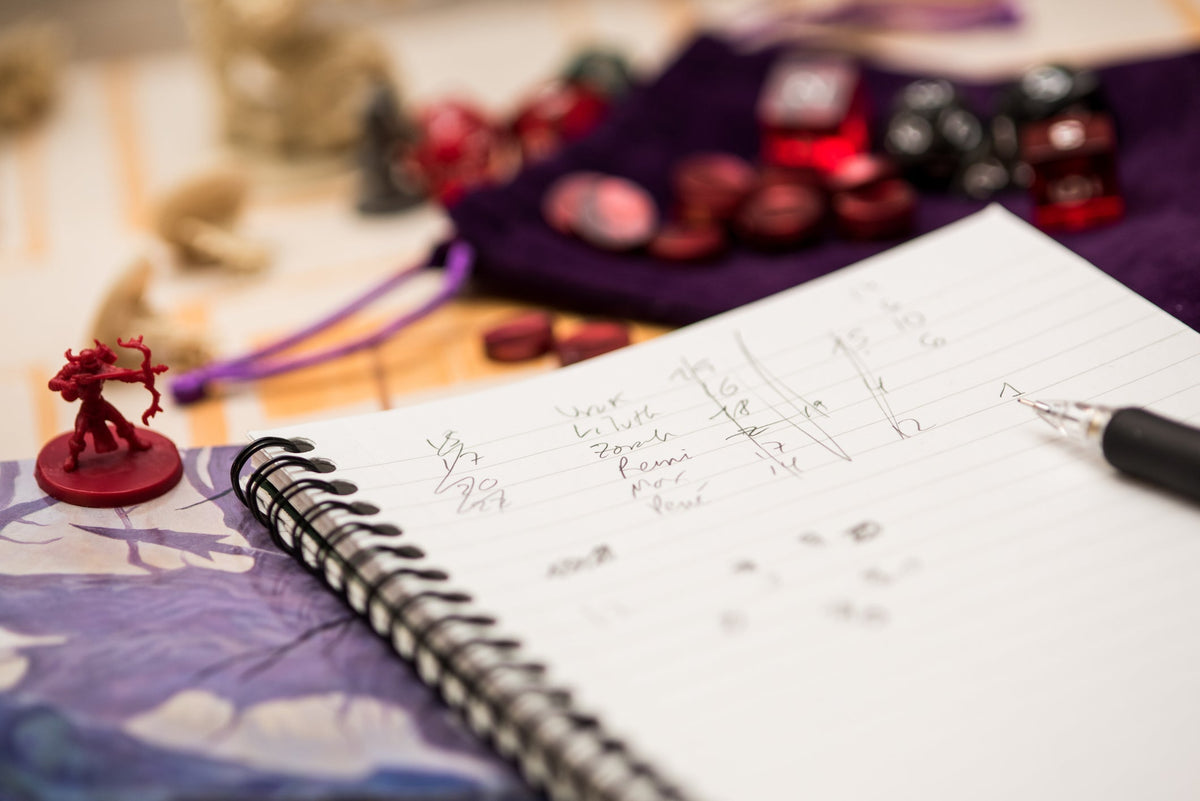
You used to get excited about session prep. Now opening your notes feels a little like opening a work email on a Sunday afternoon. The NPC voices that once came easily now sound like chores in funny hats. The group chat lights up, and instead of thinking, “Hell yes, game night!” you think, “Do I seriously need to figure out what this wizard wants from the moon cult by Thursday?”
That feeling is real, and if you’ve run games for any length of time, you’ve probably brushed up against it.
Burnout doesn’t mean you’ve failed as a GM. It doesn’t mean you’re ungrateful, lazy, uncreative, or somehow not “built” for running games. It usually just means you’ve been carrying too much of the table’s energy for too long without enough recovery, flexibility, or support.
Which, honestly, makes sense.
Game mastering can be incredibly fun, but it also asks a lot from one person. You’re organizing schedules, prepping content, improvising scenes, managing rules, reading the room, juggling tone, keeping the game moving, and trying to make sure everybody gets something cool to do. That’s a lot of hats for one human head.
So if your GM brain feels like a candle burning at both ends and somehow also in the middle, here are some actual antidotes.
Stop Trying to Be the Entire Entertainment Industry
A lot of burnout comes from one poisoned idea: that every session has to be impressive.
Not just good. Impressive.
Cinematic. Layered. Character specific. Mechanically sharp. Tonally rich. Full of memorable NPCs, meaningful choices, smart callbacks, and at least one thing your players will talk about in the group chat for a week.
That is a brutal standard to hold yourself to every single time.
You’re not producing prestige television with a writing room, a budget, and three assistant editors. You’re running a game for your friends with some notes, some dice, and whatever your brain can carry after the rest of your life has taken its cut.
It’s okay for sessions to be lighter.
It’s okay for the dungeon to just be a dungeon.
It’s okay for the party to spend a night shopping, arguing with a ferryman, and getting jumped by river goblins.
Not every session needs to be the one where the campaign’s emotional architecture reveals itself under moonlight. Sometimes people just want to kick in a door and feel competent for three hours.
Let some sessions be sturdy instead of dazzling. That alone can save a lot of energy.
Prep Less, Reuse More
This is the antidote a lot of GMs resist because it feels like cheating.
Good. Cheat.
You don’t need to invent everything from scratch every week. In fact, you probably shouldn’t. Burnout loves unnecessary originality. It thrives when you convince yourself that every tavern, every side quest, every guard captain, and every alleyway ambush must be handcrafted from artisanal narrative oak.
That way lies smoke.
Reuse your own stuff. Steal from old notes. Reskin encounters. Recycle unused NPCs. Move the cool shrine from the region the party skipped into the path they’re actually taking now. That haunted watchtower you prepped six months ago and never used? Congratulations, it now lives three miles east of the current road and has always been there.
Nobody at the table is grading you for freshness percentage.
What players remember is whether something felt fun, tense, weird, moving, or surprising in the moment. They don’t care that the smuggler contact was originally designed for a different city and was, until yesterday, named something else in your notebook.
You are allowed to conserve creative energy.
Let the Players Carry More of the Weight
Some GMs burn out because they’re trying to drag the campaign uphill by themselves.
They’re the only one taking notes. The only one remembering NPC names. The only one tracking hooks. The only one recapping. The only one scheduling. The only one pushing scenes forward when the table gets quiet.
That’s too much.
A campaign is a group project wearing a fantasy coat. Let it be one.
Ask a player to do recaps. Ask somebody to track party loot. Let somebody else manage scheduling. Encourage players to keep a running list of allies, enemies, and goals. If your table likes in-character stuff, let them write rumors, letters, journal entries, or campfire scenes that enrich the game without requiring you to generate every ounce of texture yourself.
More importantly, let the players create momentum. If they care about a mystery, make them name what they’re investigating. If they want to pursue a faction, ask what they’re hoping to get out of it. If they’re planning, don’t rescue every lull instantly. Let them wrestle with things a little.
A table gets healthier when the GM isn’t acting as the sole life support system for everyone’s engagement.
Shrink the Campaign Before You Quit It
When burnout hits, a lot of GMs feel like they have only two options.
-
Push through
-
Cancel everything
That is not true.
There is a very useful middle move: make the game smaller.
Shorter sessions. Fewer plot threads. Smaller cast. Less travel. Simpler prep. Tighter scope.
If your sprawling continent-hopping epic is eating your brain, maybe it becomes a city campaign for a while. If your political intrigue game has twelve factions and a spreadsheet that makes your eye twitch, maybe you narrow the focus to one crisis, one district, and three people who want incompatible things. If your sessions have been running five hours and leaving you hollowed out like a pumpkin two weeks after Halloween, maybe you run for three instead.
Smaller doesn’t mean worse. Smaller often means sustainable.
Burnout loves bloat. Cutting the game down to what actually matters can bring a lot of joy back.
Run a Different Kind of Session
Sometimes you’re not tired of GMing. You’re tired of carrying the same kind of energy every week.
That’s a different problem.
If every session has been heavy plot, layered secrets, and emotionally significant conversations with morally ambiguous nobles, maybe what your brain needs is a completely different flavor for a week. Run a heist. Run a festival. Run a stupid haunted lighthouse. Run a monster hunt with one good tavern brawl and a suspiciously dramatic fisherman. Run a one-shot in the same world where everybody plays goblins trying to steal a bell.
Variety can be medicine.
Not every burnout problem is about quantity. Sometimes it’s about texture. Your creative muscles are tired of lifting the same weight in the same way.
A tonal palate cleanser can do wonders.
Give Yourself Permission to End Things
This is a hard one, but it matters.
Sometimes a campaign isn’t “in a rough patch.” Sometimes it’s done. Not because the story is perfectly complete. Not because every character arc landed in a beam of golden light. Just done.
And dragging a dead campaign behind you out of guilt is one of the fastest ways to start hating the hobby.
You are allowed to end a game that has run its course, even if the ending is imperfect. You’re allowed to say, “I loved this, but I don’t have the fuel to keep it going.” You’re allowed to wrap with an epilogue, a final dungeon, a narrated montage, or a last big choice and call it there.
A campaign that ends isn’t a campaign that failed.
Sometimes the most loving thing you can do for a game is let it have an ending instead of stretching it until everyone associates it with schedule stress and tired eyes.
Play More, Run Less
This sounds obvious, but it gets missed constantly.
If you've been GMing nonstop for years, there’s a decent chance part of your burnout is coming from a simple imbalance. You’re always facilitating, rarely just inhabiting. Always steering, rarely surprised. Always setting the table, rarely sitting down hungry.
Play again.
Even a one-shot. Even a short side game. Even a board game night where somebody else has to explain the rules for once, and you get to be gloriously off duty. Let someone else hold the narrative tray. Let yourself be the person who only has to care about one weird little guy with a sword and a bad accent.
Being a player can refill parts of your tank that prep advice cannot touch.
It reminds you what feels fun from the other side of the screen. It reminds you that not every memorable moment comes from perfect planning. It reminds you that sometimes the table is having a wonderful time while you’re privately worrying that the pacing is off by six percent.
That perspective helps.
Stop Prepping for the Version of the Group in Your Head
A sneaky source of burnout is prepping for a group more engaged, more focused, or more plot-hungry than the one you actually have.
This happens all the time. You build deep lore for players who mostly want momentum. You prep emotionally intricate scenes for a crew that loves chaos. You design layered tactical combat for a table that mainly enjoys talking to shady merchants and adopting monsters.
Then you wonder why prep feels unrewarding.
Prep for the game your players are actually playing.
If they love recurring NPCs, invest there. If they like straightforward adventure with strong flavor, do that. If they reliably ignore political complexity in favor of solving immediate problems with charm and fire, stop trying to force senate drama into their bread basket.
The more your prep aligns with what the table naturally bites on, the less energy it takes to get payoff.
And payoff matters. Burnout gets worse when effort and joy stop meeting each other.
Build in Off-Weeks Before You Need Them
A lot of GMs treat rest like an emergency brake.
They only take a week off once they’re already fried, resentful, and fantasizing about faking their own death to avoid writing stat blocks for sewer cultists.
Try not to wait that long.
Planned breaks are much healthier than collapse breaks.
Take a week off every month or every few sessions. Rotate in one shots. Watch a movie together. Play something low prep. Let the campaign breathe. Anticipated pauses keep the game from feeling like an endless treadmill that spits out goblins and administrative burden.
Rest works better when it’s normal instead of dramatic.
Your players will usually adjust just fine, especially if the rhythm is clear. And honestly, most groups benefit from a little breathing room anyway.
Talk to Your Players Before You Start Secretly Hating Them
This is perhaps the least glamorous antidote, but it’s one of the best.
If you’re burning out, tell your group.
Not in a martyr way. Not in a “none of you appreciate me” speech from atop the mountain of your own resentments. Just honestly. “I’m feeling worn down, and I need to lighten the load a bit.” Or, “I need to simplify prep for a while.” Or, “I’m still into the game, but I can feel myself running low.”
Good players generally want the game to continue and want you to enjoy running it. But they cannot help with a problem they don’t know exists.
Sometimes that conversation gets you more support, more flexibility, and more understanding than you expected. Sometimes it reveals that the players were already having fun and needed far less from you than you thought. Sometimes it lets you reshape the game before burnout hardens into dread.
That’s worth a lot.
Make Space for Low-Stakes Joy
When a GM is burned out, they often start treating fun like it has to justify itself.
If the scene isn’t plot-relevant, if the NPC isn’t secretly important, if the encounter isn’t advancing the campaign engine, then it starts to feel indulgent.
That is nonsense, and burnout loves it.
Low-stakes joy is part of what keeps campaigns alive.
A ridiculous shopkeeper. A festival game. A terrible local legend. A horse the party becomes emotionally invested in for reasons nobody can explain. A dinner scene. A campfire argument. A side quest that exists mostly because it sounds fun.
These moments aren’t wasted. They’re part of the hobby’s heartbeat. They give you and the players room to enjoy each other without everything carrying the weight of destiny.
Sometimes the antidote to burnout isn’t better structure. Sometimes it’s remembering why this was fun in the first place.
You Don’t Have to Earn Rest by Breaking First
This might be the most important antidote of all.
A lot of GMs are generous in ways that become self-punishing. They keep the game going because people are counting on them. They prep through tiredness because canceling feels like failure. They assume their own enjoyment is the least important variable as long as the group has a good night.
That mindset will grind you down.
You don’t have to reach total depletion before you’re “allowed” to make changes. You don’t need to become openly miserable before taking a break counts as legitimate. You don’t owe the table a version of yourself that runs on fumes and duty.
The game is supposed to be fun for you, too.
Not every week, perfectly, forever. That isn’t how any hobby works. But broadly, yes. If the role has stopped feeling playful and started feeling extractive, that’s not a personal weakness. It’s information.
Use it.
Adjust early. Shrink things. Reuse more. Ask for help. Take breaks. End what needs ending. Play something lighter. Hand somebody else the screen for a while. Protect the part of your brain that still lights up when someone says, “So what’s behind the door?”
Because that spark is the real resource.
And unlike rations, spell slots, and hit points, it’s one you cannot afford to treat as infinite.
Your Turn!
How do you as a GM handle burnout? Let us know in the comments!
Explore Immersive Fantasy TTRPG Settings
A memorable fantasy TTRPG setting should feel bigger than a single quest.
Gooey Cube's world of Zyathé is filled with cities, cultures, creatures, mysteries, factions, personalities, and stories waiting to be discovered. Adventures such as Darkenhaven and the Red Star Rising campaign give Game Masters a foundation for running sessions while leaving plenty of room for individual groups to shape the story.
Players can explore dangerous streets, investigate strange events, meet characters with their own motivations, uncover secrets, and make decisions that change how the adventure unfolds.
For GMs, that depth creates something especially valuable: possibilities.
A richly developed TTRPG campaign setting makes it easier to improvise because there is always another person, place, rumor, conflict, or detail you can pull into the game.




0 comments