
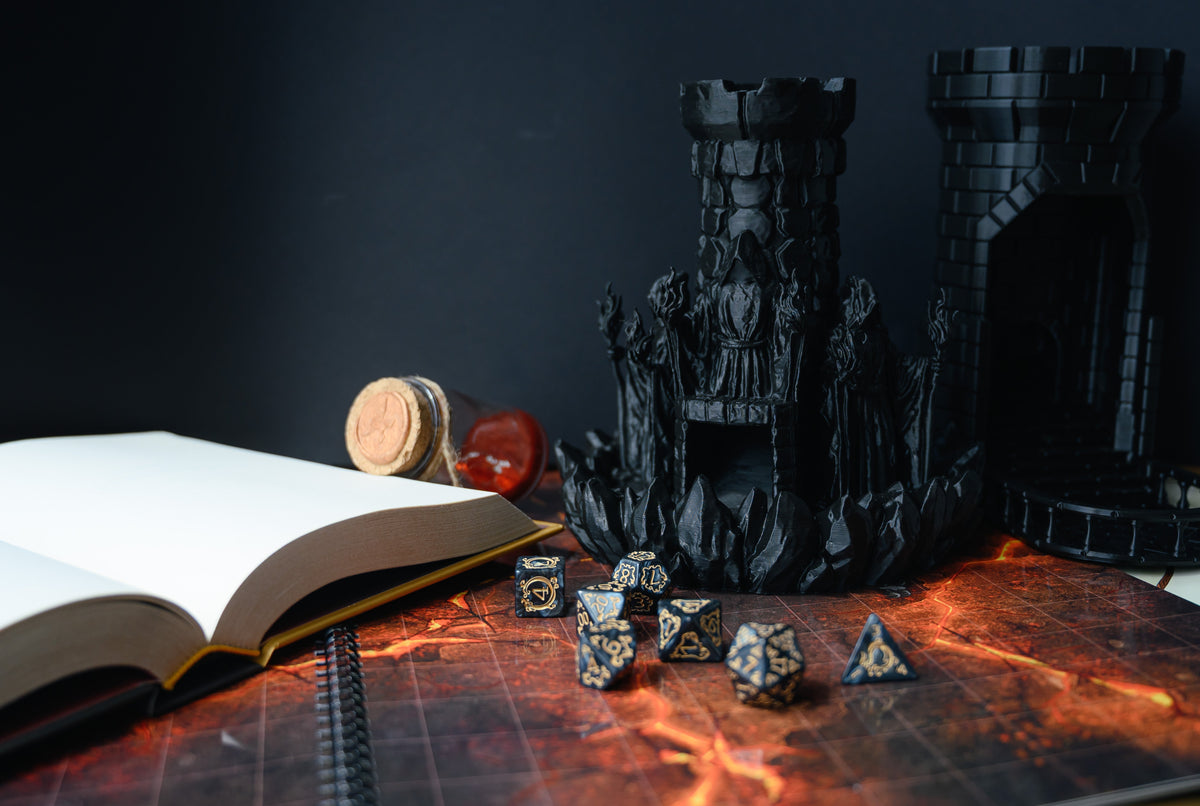
A recurring villain should never feel like the same boss fight wearing a different coat.
The best ones change because the players change them. They learn from humiliation, adapt to the party’s favorite tricks, develop new grudges, lose allies, gain scars, and occasionally discover that the heroes they dismissed three months ago have become a very serious problem. By the time the party meets that villain for the third or fourth time, everybody at the table should feel the history between them.
That history is what makes recurring villains special.
A monster in a dungeon can be terrifying, but a villain who remembers exactly what the rogue said while stealing their favorite sword has something a random monster doesn’t: a relationship with the party. Maybe it’s hateful. Maybe it’s strangely respectful. Maybe it’s become so personal that both sides have started making objectively terrible strategic choices simply because they really, really want to ruin the other guy’s afternoon.
When that happens, you’ve got something good.
The trick is keeping the villain alive long enough to develop without making the players feel like you’ve wrapped them in plot armor. A recurring antagonist should survive because the fiction allows it, not because the GM has decided they’re contractually obligated to appear in six more sessions.
Start With Someone Who Can Change
Not every villain needs to recur.
The mad ogre guarding the bridge may be perfectly memorable after one encounter. The cult leader completing tonight’s sacrifice might have exactly enough story for one glorious confrontation. Trying to force every antagonist into a long-term role can make your campaign feel crowded with people who refuse to leave.
Recurring villains work best when there’s somewhere for them to go emotionally, politically, or mechanically.
Start with a motive strong enough to survive failure.
Maybe the royal inquisitor truly believes the kingdom can only survive through absolute obedience. Perhaps the outlaw sorcerer is determined to restore a magical tradition the ruling church erased. Maybe the mercenary captain simply wants enough wealth and power to ensure they’ll never be helpless again.
Whatever the motive is, it should still matter after the players interfere.
If the villain’s entire identity is “I want the artifact,” and the party destroys it, you’ll need another reason for them to remain relevant. If their larger motivation is “I want to overturn the existing order,” losing one artifact simply changes the plan.
That gives you room to evolve.
Let the First Defeat Hurt
If the players beat your villain, let them beat the villain.
Don’t immediately reveal that the loss was secretly part of a master plan unless you’ve genuinely set that up. Nothing drains satisfaction faster than hearing, “Actually, the villain wanted you to destroy the fortress because that was phase twelve of their brilliant scheme.”
Sometimes bad guys screw up.
Sometimes the barbarian breaks their expensive magic staff over a stone railing.
Let it happen.
The important part is figuring out how the villain responds afterward.
Maybe they lose status within their organization. Perhaps their patron decides they’re no longer reliable. Maybe they become obsessed with the specific character who embarrassed them. If the party left them physically injured, that injury might change how they fight, dress, or move.
Consequences give a recurring villain texture.
Imagine an arrogant duelist who loses an eye during their first encounter with the party. The next time they appear, they’ve stopped relying on elegant swordplay and started hiring archers. Their confidence is gone, but their caution has become much more dangerous.
That’s evolution.
Give Them a Memory
Villains should remember what happened.
This sounds obvious, but it’s surprisingly easy to run antagonists as if each encounter begins with a clean character sheet.
If the wizard loves casting fireball, a surviving enemy should eventually prepare for fire.
If the rogue always tries to flank, the villain might start surrounding themselves with guards.
If the party routinely talks enemies into switching sides, a clever antagonist may stop allowing questionable underlings anywhere near the heroes without supervision.
Players love discovering that an enemy has been paying attention.
It tells them their actions matter.
Better still, let the villain remember the emotional details too. They might repeat something a character once said. They could carry a trophy taken from a previous encounter. Maybe they’ve started spreading a distorted version of the party’s reputation across the region.
A rivalry gets much richer once both sides have receipts.
Change Their Methods, Not Just Their Numbers
One of the least interesting ways to evolve a villain is simply increasing their statistics.
The party has gained levels, so now the villain has more hit points.
Fine.
Necessary sometimes.
But it doesn’t tell a story.
A returning villain should fight, scheme, or negotiate differently because of what they’ve experienced.
The necromancer who once attacked openly may now work through proxies because the party nearly killed them. The corrupt noble who relied on political influence might turn to blackmail after losing public support. The bandit queen who once saw the heroes as nuisances may begin targeting their supply lines because she’s realized direct confrontation is stupid.
Changing methods makes the villain feel intelligent.
It also prevents encounters from becoming repetitive. Players shouldn't be able to say, “Oh, this again,” every time the antagonist appears.
They should be wondering what the bastard learned.
Let Success Change Them, Too
Villains don't only evolve through failure.
Victory can be just as transformative.
Suppose the antagonist successfully conquers a city between encounters. Suddenly they aren't operating from a hidden warehouse anymore. They've got soldiers, administrators, public support, and responsibilities they didn't have before.
That changes everything.
Maybe success makes them arrogant.
Maybe it makes them paranoid because now they have something to lose.
Perhaps they discover ruling is considerably harder than conquering, and the compromise starts eating away at the ideals that originally motivated them.
Power creates pressure.
A villain who becomes stronger should also become more complicated.
If every success simply makes them richer, tougher, and more evil, the character can start flattening into a video game boss waiting for the final level.
Let power reveal something about them.
Allow Relationships to Get Weird
The best recurring villains rarely remain simple enemies forever.
Repeated encounters create familiarity, and familiarity gets strange.
A villain might respect the fighter because they've crossed blades three times and neither one has ever fought dishonorably. They might genuinely like the bard even while wanting the bard dead. They could find themselves temporarily allied with the party when something much worse arrives.
Those moments are fantastic because they complicate the relationship without erasing the conflict.
Imagine the party and their longtime enemy being trapped inside the same collapsing dungeon.
Do they cooperate?
Can they trust each other long enough to escape?
Does someone use the opportunity to settle the score?
Players will eat that situation alive.
You don't need to redeem the villain. In fact, you usually shouldn't unless the story naturally goes there. But letting the relationship develop beyond “we hate each other” gives everybody more to work with.
Hatred has flavors.
Use them.
Don't Give Them Plot Armor
This is probably the hardest part of running a recurring antagonist.
If the players genuinely corner the villain and kill them, they should probably die.
That can be painful for a GM who had three future appearances planned, but protecting an antagonist too aggressively teaches the table that their victories aren't real.
Teleporting away every time they're about to lose gets old.
Secret escape tunnels get old.
Mysterious resurrection gets very old.
Instead, create believable escape opportunities before you know whether the villain will need them.
A cautious villain may always keep an exit nearby. A politically powerful antagonist may rarely appear without guards. A wizard could have prepared emergency magic because that's what intelligent wizards do.
But once those options are exhausted, accept the result.
Sometimes the recurring villain's story ends earlier than expected.
That's tabletop.
The players will probably remember killing the GM's supposedly major villain in session nine much more fondly than they would've remembered the carefully planned session twenty finale.
And you can always make the consequences of that death interesting.
Let Other People React to Their Evolution
A recurring villain doesn't exist in isolation.
Their allies, followers, victims, and rivals should notice the changes, too.
Maybe their lieutenants are losing faith after repeated defeats. Perhaps their followers become more fanatical as the villain grows desperate. A rival could smell weakness and begin trying to take over.
This gives you another wonderful tool: factions within the villain's organization.
The party might realize the villain's second-in-command is considering betrayal. They could exploit resentment among soldiers who haven't been paid. They might even discover that some members of the enemy organization preferred the villain before the rivalry with the heroes consumed them.
Now the villain's evolution affects the world around them.
That's when an antagonist starts feeling truly embedded in the campaign.
Give Them Visible Scars
Evolution should sometimes be obvious before the villain says a word.
Maybe they've replaced the hand they lost with a magical prosthetic.
Perhaps their once immaculate clothing has given way to armor because they're no longer taking chances.
Maybe the charming politician now travels surrounded by guards and refuses food they haven't watched someone else taste first.
These physical and behavioral changes immediately remind the players of what happened before.
They also create satisfaction.
The party gets to look at the villain and think, “We did that.”
Few things make a campaign feel more responsive than seeing your impact written directly onto someone who matters.
Scars don't have to be physical either.
A villain can lose confidence.
They can stop making jokes.
They can become more patient.
They can become less patient.
The person who confidently dismissed the party during their first meeting might be visibly furious the next time they see them.
These all leave a mark.
Know When the Rivalry Has Reached Its Ending
Recurring villains need endings.
Eventually, the relationship has said what it needs to say.
If the antagonist keeps returning after every defeat, they'll stop feeling dangerous and start feeling like a neighborhood problem nobody has properly addressed.
Let the final confrontation mean something.
Bring back elements from previous encounters. Let the villain use tactics they've learned from the party. Let their personality reflect everything they've lost, gained, and become along the way.
Most importantly, let the players feel that history.
The final battle against someone you've hated for twenty sessions should feel different from fighting a monster you met that evening.
Maybe the villain knows everyone's names.
Maybe they know which character will refuse a surrender.
Maybe they still have the scar from the first time the fighter hit them.
Those details turn a boss fight into a conclusion.
And sometimes the ending won't be a fight at all.
The villain might surrender.
They might escape permanently.
They could lose everything and simply become irrelevant.
They might even achieve enough of their goal that the party has to live with an uncomfortable compromise.
Whatever happens, let the rivalry end because something has genuinely changed.
Make the Villain Part of the Party's History
Recurring villains become memorable when they stop feeling like obstacles and start feeling like relationships.
The party remembers the first meeting.
They remember the humiliation.
They remember the escape.
They remember the time they were forced to work together.
They remember the ally who died because of them and the city that changed hands because nobody stopped them quickly enough.
By the time the final confrontation comes, the villain carries all of that history into the room.
That's why evolution matters.
A villain who stays the same becomes predictable. A villain who changes alongside the heroes becomes part of the campaign's DNA.
Let them learn.
Let them fail.
Let them win.
Let them get angry, cautious, ambitious, wounded, respected, hated, and occasionally very tired of these adventurers showing up and wrecking everything.
Then, when the party finally meets them for the last time, nobody needs a recap.
Everyone already knows exactly why this matters.
Your Turn!
Tell us about a memorable villain with a wild story arc in the comments!
Spend Less Time Preparing and More Time Playing
Every GM has a different preparation style. Some love building sessions for hours. Others want enough structure to confidently sit down and start playing.
Gooey Cube TTRPG campaigns are designed to support both.
Use the material exactly as written, pull individual locations or characters into your own campaign, or reshape the story to fit your group. The goal isn't to tell Game Masters how they have to run their table. It's to give them enough material that they're never far from the next idea.
Because preparation should help you run the game, not keep you from playing it.








0 comments