
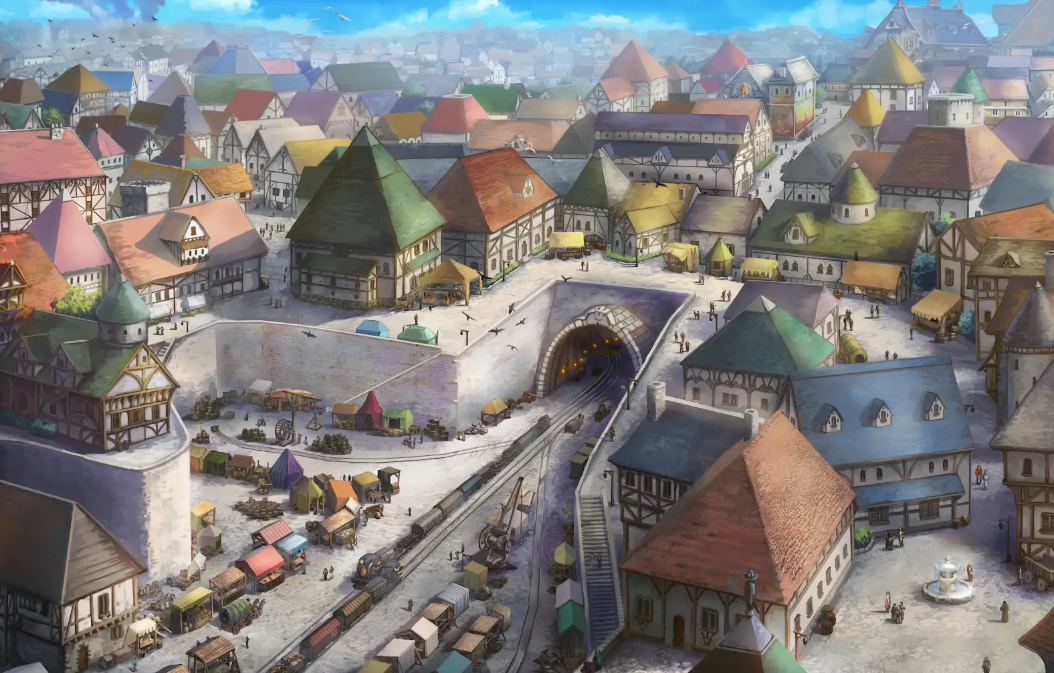
Fantasy cities are easy to make broad and weirdly hard to make memorable.
Most of us can come up with “big trade city by the river” or “ancient capital full of politics” in about twelve seconds. That part’s not the problem. The problem is getting the place to feel like somewhere your players can actually picture, navigate, and care about once they’re in it.
That’s where strong district identities come in.
A good city isn’t just one blob of vibes with different street names. It’s a patchwork of neighborhoods that feel distinct from one another in ways players can notice fast. The temple quarter shouldn’t feel like the docks. The docks shouldn’t feel like the noble hill. The market ward shouldn’t feel like the district where all the chandlers, rat catchers, and unofficial grave robbers somehow ended up living next to one another.
When districts have identity, the city starts to click. Players remember where things happened. Chases feel better. Politics get sharper. Random encounters stop feeling random. Even a simple walk across town starts telling a story.
And the best part is, you don’t need to design seventy blocks of zoning law to pull it off.
Start With What the District Does
The easiest way to make a district feel distinct is to start with function.
What is this part of the city for?
Who works here? Who lives here? Who avoids it? What draws people in, and what pushes them out?
That sounds obvious, but it does a lot of heavy lifting. A district with a clear social and economic purpose starts generating identity almost immediately.
Maybe one district is where ships unload, warehouses loom, and half the taverns exist to help people forget the sea. Maybe another is where scribes, advocates, notaries, and minor officials cluster, creating a whole neighborhood of paper, seals, gossip, and expensive ink. Maybe another began as a refugee quarter and still carries that history in its food, shrines, and street festivals, even though the city’s old money still talks about it like it appeared last week and is terribly inconvenient.
Function gives you a spine.
And once you’ve got that spine, you can start hanging flavor, conflict, and character on it.
Give Every District Its Own Sensory Profile
If you want players to remember a district, make it hit the senses fast.
What does it smell like?
What does it sound like?
What’s the street traffic like?
What are people wearing?
What’s always in the air here besides air?
A district identity gets much stronger once it has a sensory signature. The dye makers’ ward has runoff-stained gutters and colored steam drifting from laundry lines. The fishmarket starts loud before dawn and smells like brine, salt, and bad choices. The rich district is quieter than it should be, with trimmed hedges, private guards, and the eerie sense that someone will absolutely complain if a cartwheel squeaks too loudly.
This doesn’t need to be purple prose. You don’t need five lush paragraphs every time the party turns a corner. Usually one or two details will do it.
Players remember specific things. Not “the artisan district had character.” They remember “the district where the chimneys all belched green smoke” or “the one with all the rooftop gardens and the creepy silent servants.”
That is your target.
Build for Contrast, Not Completeness
A common worldbuilding trap is trying to make every district equally detailed and equally important.
You don’t need that.
What you need is contrast.
A city becomes easier to grasp when each major district feels different from the others in a strong, readable way. Not every neighborhood needs a ten-page backstory. It just needs enough identity that players immediately feel the shift when they enter it.
Think in big contrasts first.
Crowded versus spacious.
Sacred versus commercial.
Old money versus new money.
Official versus lawless.
Vertical versus sprawling.
Loud versus watchful.
Permanent versus makeshift.
A city where every district is some variation of “busy market streets with mixed housing” may be realistic in one sense, but it will blur together at the table. You want clear edges. You want the players to say, “Oh, we’re here now.”
That’s where the magic is.
Let History Show Through the Streets
The best districts don’t just serve a current purpose. They carry the marks of what they used to be.
That kind of layering makes a city feel lived in.
Maybe the elegant ambassador district used to be a fortress line, and the old walls are still built into manor foundations. Maybe the theater quarter was once a burned-out slum, and people still use old alley names that don’t match the official maps. Maybe the temple district was originally a cemetery outside the city limits, which is why there are still bones under half the staircases, and everyone pretends that’s completely normal.
History gives a district its weird corners.
And weird corners are what players latch onto.
A district becomes much more memorable once it feels like it grew over time instead of being built all at once by a city-planning wizard with a neat handwriting fetish.
Give Each District a Social Reputation
This part matters a lot for roleplaying.
How do people in the city talk about this district?
Not what is objectively true. What’s the reputation?
The wealthy district might call the riverside quarter filthy and dangerous. The riverside quarter might call the wealthy district bloodless, soft, and full of smiling thieves who own better curtains. The scholar’s district might be admired, mocked, resented, or all three depending on who you ask. The old military quarter might still act like it runs the city even though half its glory is twenty years gone and everyone knows it.
Reputation adds friction.
It tells the players that districts aren’t just physical places; they’re social identities. Going somewhere says something. Living somewhere says something. Being seen there at the wrong time says a lot.
This is great fuel for rumors, prejudice, alliances, class tension, and all the little judgments that make cities feel alive.
Put Different Problems in Different Districts
One of the smartest things you can do is tie distinct forms of conflict to each district.
Don’t just change the wallpaper. Change the trouble.
At the docks, the problem might be smuggling, labor unrest, and monsters in the harbor.
In the temple quarter, the problem might be religious rivalry, missing relics, and suspicious miracles.
In the noble district, the problem might be blackmail, inheritance games, and very polite murder.
In the crafts ward, the problem might be sabotage, guild politics, and somebody’s alchemical runoff turning pigeons into six-eyed mutants.
Now the players aren’t just moving through different scenery. They’re moving through different story engines.
This is huge for tabletop. District identity works best when it creates different kinds of play. Different stakes. Different NPC behavior. Different opportunities to get in over your head.
Use Local NPCs as District Ambassadors
The fastest way to communicate a district’s identity is often through the people in it.
Who belongs here so completely that talking to them teaches the players what the neighborhood is about?
The retired dock boss who still knows every ship captain worth trusting.
The shrine keeper who has lived in the temple district long enough to remember three schisms and one haunting.
The street food vendor who knows which guild is feuding because they feed both sides and hear everything.
The bored noble teenager who sneaks into the wrong part of town because it’s the only place anything real ever happens.
The alley surgeon, the bridge toll collector, the rooftop messenger, the exhausted magistrate, the lamplighter with too many keys. These people do a lot of work.
A strong district usually has at least one NPC who feels like they could only come from there.
Architecture Should Tell You Who Has The Power
District identity isn’t just culture. It’s also structure.
Who gets sunlight?
Who gets clean water?
Who gets wide streets?
Who gets stone walls and who gets timber patched over with hope?
Who has guards on every corner and who has neighbors doing that job themselves because nobody else will?
These details tell players what the city values without requiring a lecture from an urban historian in a velvet cap.
A district’s physical layout reveals power, neglect, fear, ambition, and old compromises. Maybe the city’s richest district sits uphill where the air is cleaner, and the floodwater never reaches. Maybe the poorest neighborhoods are built around old quarry cuts that make them maze-like and easy to trap. Maybe the mercantile center has covered walkways and public fountains because trade gets investment, while the laborers’ district is covered in mud in the spring and dust in the summer and is expected to be grateful for both.
That kind of design makes the city legible.
And legibility makes it easier for players to engage with the setting rather than just pass through it.
Give Districts Borders That Matter
One reason cities blur together in play is that the transitions feel invisible.
The party goes from one place to another, and nothing about the city really changes except the GM saying, “Now you’re in a different part of town.”
That’s not enough.
The border between districts should feel like crossing into different local logic. Maybe the roads widen. Maybe the smells change. Maybe patrols get heavier. Maybe the shrines switch gods. Maybe the street language changes. Maybe the houses stop touching. Maybe the beggars disappear, which is somehow more unsettling than if they had stayed.
These borders don’t have to be walls, though they can be. They can be symbolic, economic, architectural, or social. But they should exist.
A strong transition helps players experience the city as a set of living regions rather than a single giant urban soup.
Don’t Make Every District Internally Perfect
Here’s another helpful trick. Even if a district has a strong identity, leave room for contradiction.
The temple district should have corruption somewhere in it.
The wealthy district should have somebody drowning in debt behind those polished doors.
The rough district should have tenderness, beauty, and local pride.
The market quarter should have quiet corners where people actually live and get tired of adventurers knocking over their fruit stands.
Without contradiction, a district becomes a cartoon. With contradiction, it becomes a place.
Players love discovering that sort of hidden texture. It rewards curiosity. It lets your city surprise them without losing coherence.
A Handy Shortcut: Give Each District Five Things
If you want a practical method, here’s a very easy one. For each major district, jot down five things:
-
What the district is for
-
What it smells or sounds like
-
What people say about it
-
What kind of trouble lives there
-
One landmark or NPC players will remember
That is enough to get rolling.
For example:
The Lantern Docks
-
It handles river trade and warehouse storage.
-
It smells like pitch, fish, and wet rope.
-
People say nothing enters the city here without three people taking a cut.
-
The main trouble is smuggling and labor fights.
-
Everyone remembers the chain bridge tavern and its one-eyed owner who never forgets a debt.
Boom. District.
You don’t need more until play demands more.
Cities Get Better Once Players Can Read Them
At the end of the day, strong district identity is about usability just as much as beauty.
A good fantasy city shouldn’t just impress your players; it should help them play. They should know where to go for information, where to go for trouble, where to go to disappear, where to go to be seen, and where to go when they’re one bad decision away from causing a civic incident.
That clarity is powerful.
It makes the city feel larger, not smaller, because each part carries its own logic. It gives your setting memory. The players stop saying “that one city from six sessions ago” and start saying, “No, not there. The knife fight happened in the tannery ward, and the cursed fountain was up by the old temples.”
That’s when you know it’s working.
So when you build your next fantasy city, don’t just think skyline. Think neighborhoods. Think rivalries. Think smells, gossip, borders, jobs, and local pride. Think about who lives where, who gets ignored, who has power, and what kind of trouble belongs to each block.
Give the city districts that feel like themselves.
Your players will do the rest…usually by getting banned from at least two of them.
Your Turn!
What's a city that you've played in that you couldn't get enough of? Let us know in the comments!
TTRPG Campaigns Made for Game Masters
Running a TTRPG campaign takes creativity, flexibility, and a surprising amount of preparation. Maps need to be ready. NPCs need personalities. Locations need history. Encounters need stakes. And, inevitably, your players will become fascinated with the one character you thought they'd ignore.
Gooey Cube builds campaigns with those moments in mind.
Our TTRPG campaign resources give Game Masters richly developed locations, memorable NPCs, visual references, maps, encounters, and story material that can help bring a session to life. Instead of handing you a few pages of adventure text and leaving the rest up to you, Gooey Cube gives you a deeper collection of tools to draw from throughout the campaign.
That means more options when players wander away from the expected path and more opportunities to make the world feel like it existed long before the party arrived.










0 comments